
Denmark’s first AI Skills Framework aims to make AI accessible to everyone
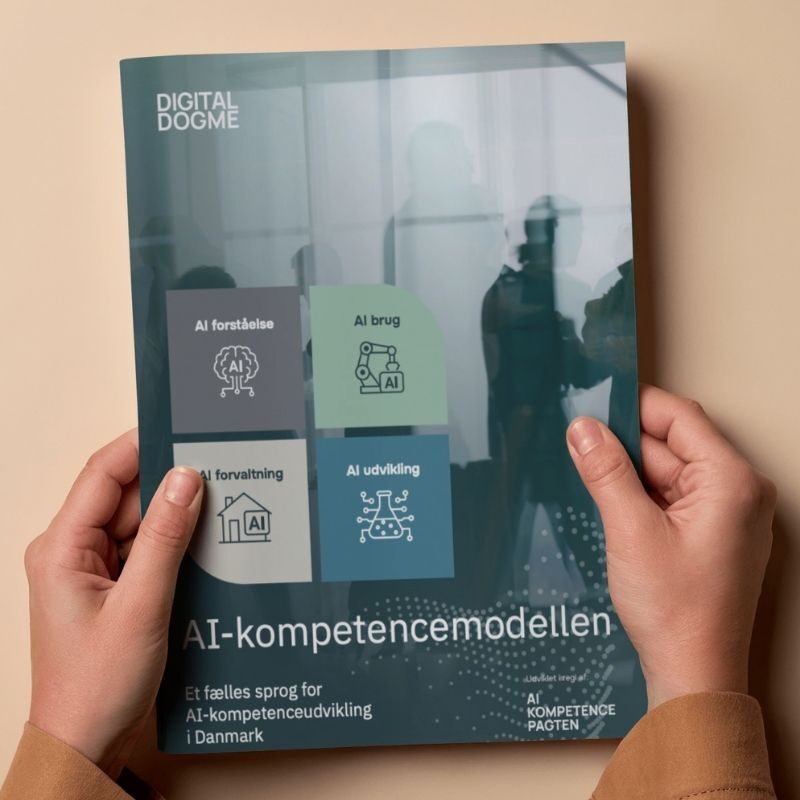
Denmark’s first AI Skills Framework gives both leaders and employees a concrete tool to understand, use and develop AI skills – fully aligned with the EU AI Act. The model has been developed by the AI Skills Pact
According to a new survey conducted by, among others, Mandag Morgen, 57% of Danes want to improve their digital skills, and 78% see digital competencies as a prerequisite for participating in the labour market. Yet when it comes to AI, many still struggle with limited knowledge and hands-on experience.
A new tool is now set to make it easier for Danes to begin upskilling in artificial intelligence. The AI Skills Pact in Digital Dogme is launching Denmark’s first AI Skills Framework, comprising ten AI competencies in total. The model is designed to make it easier to plan and carry out AI upskilling across sectors and professions. It is the first fully integrated framework that enables workplaces and employees to develop AI skills responsibly and in line with regulation.
“The framework supports a practice-oriented approach to learning, where competency development happens not only through courses, but also through daily use, peer learning and knowledge sharing,” says Jakob Ravn, Executive Director of Educational Development and Quality at CBS, one of the partners behind the model.
A shared language for AI competenciesThe AI Skills Framework responds to the growing need for clarity and shared concepts as organisations move forward with implementing AI. It defines ten core AI competencies across four areas: AI understanding, AI use, AI development and AI governance. Each competency can be developed at three levels: basic, intermediate and advanced. The model can be used for strategic competency planning, teaching, training programmes and development dialogues.
Download the AI Skills Framework here
According to the AI Impact Barometer conducted by HBS Economics for Digital Dogme and HK, 40% of Danes who have completed AI training focused primarily on learning new AI tools. Only 7% have developed competencies in anchoring AI solutions within their organisation, and just 16% have trained in assessing and managing AI-related risks. These two areas are among the competencies most lacking in Danish workplaces, and many organisations highlight them as barriers to progress.
“AI literacy is not one thing. The AI Skills Framwork is a truly unique initiative. It provides both a shared language and a shared direction for how Denmark develops the skills that will drive the next digital wave. Leadership and HR can now plan competency development that genuinely matches the organisation’s needs — today and in the future,” says Loa Brix, Programme Director for the AI Skills Pact.
The framework also supports the new requirements in the EU AI Act, which obliges organisations to ensure AI literacy among employees who work with or are affected by AI. It provides a structured foundation for identifying, developing and documenting the competencies that support compliance, good practice, individual development and organisational needs.
From task force to 65 partners: Scaling the frameworkThe AI Skills Framework has been developed in collaboration with five partners in the AI Skills Pact’s Method Task Force: COWI, IDA, HK, CBS, Erhvervsakademi København, and HBS Economics. In the coming months, the model will be rolled out to the wider partner group within the AI Skills Pact, consisting of 65 of Denmark’s most influential organisations – a group that continues to grow.
“The model makes it possible to continuously assess how we as a society develop our AI competencies. That is crucial in a global context where competitiveness is constantly shifting,” says Stefan Brandt, Digital Director at COWI, who contributed to the development of the model.
Download here